I've met a lot of people in tech lately who are focused on spending less on tokens. Shared subscriptions, cheaper models, getting more out of a plan before paying for another one. I understand the instinct. At worcflow, we take frugality seriously. But I think a lot of this optimisation is premature.
If your team and systems can turn tokens into good work, I'd first try to get as much value and speed out of them as possible. We are still discovering what that work can be.
We started with faster coding
Our first use of Claude and Codex was straightforward: help developers write code faster. They could explore alternatives and get through implementation sooner. Useful, and easy to account for as developer efficiency.
Then we gave agents testing capabilities. Real browsers, real email flows, the journeys somebody actually takes through the product. They could keep checking those journeys as we made changes. Even the most committed analyst has other things to do; these checks no longer had to wait for a free afternoon.
Production reliability came next. We reached a point where every individual 4xx and 5xx event gets investigated for its root cause, in the context of our live changes. We aren't waiting for a spike. Flaky tests get triaged automatically, and agents add missing test coverage along the way.
It feels like a team of magic elves is working alongside us, catching things and thinking through details we'd otherwise struggle to get to. The feeling is incredible.
It goes beyond the product
We also use agents to research customers before calls, including the tools they already use. Something as simple as looking up a company's MX records can suggest whether they use Microsoft 365, Google Workspace or Zoho. It's a clue to confirm, since an email gateway can hide the underlying provider.
That lets us walk into the call ready to discuss the relevant connectors. It's a small piece of preparation, but doing it consistently makes the conversation more useful. Otherwise, it's the sort of thing you remember five minutes before the meeting.
The return grew as the work expanded
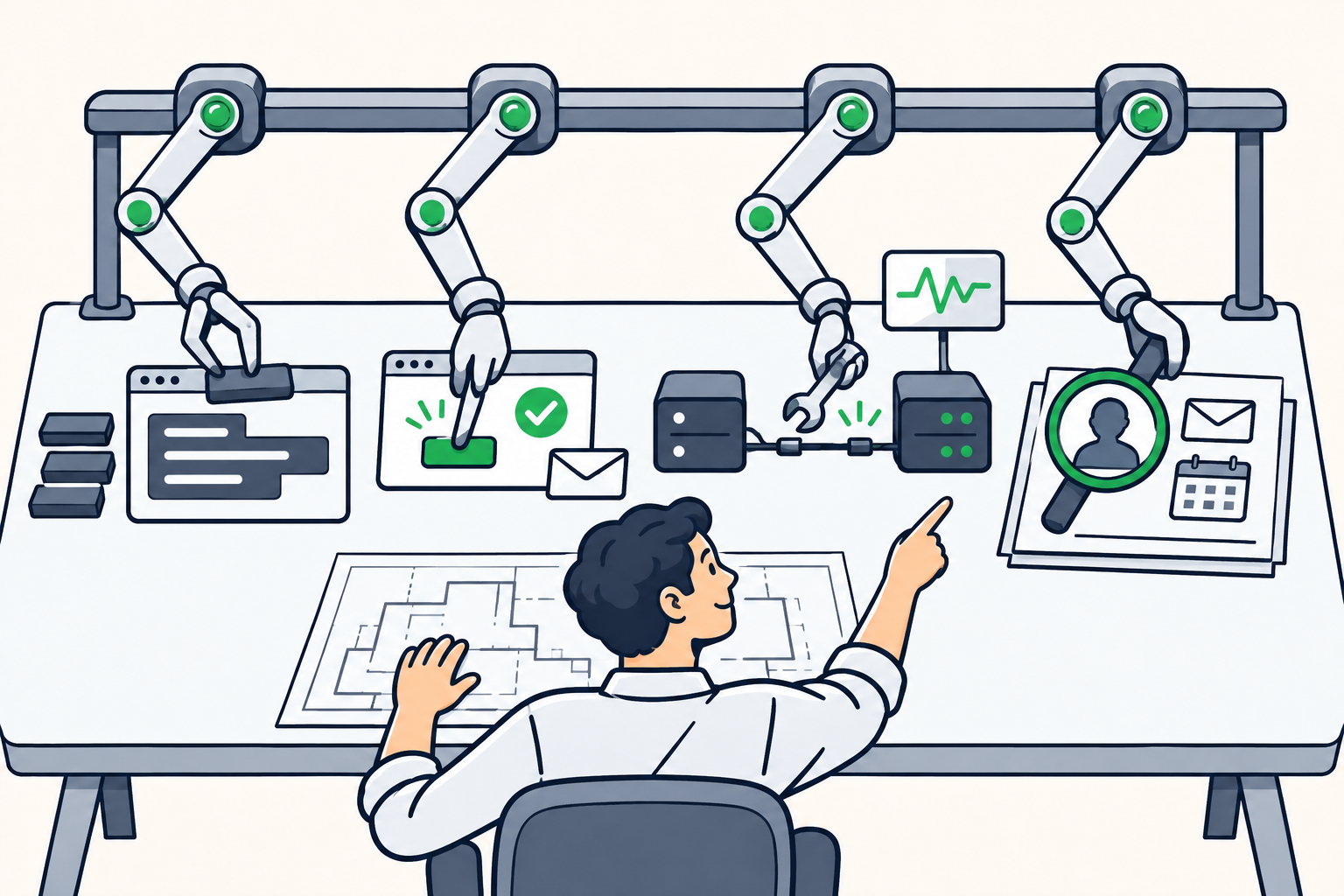
The surprising part has been how much more useful the spend became as we gave agents more responsibility. Faster coding was the beginning. Testing and production investigations started improving the work around the code, too.
These activities feed each other. An investigation can expose a missing test. Adding that test can catch the next regression. The next change benefits from work done on the previous one.
That's our experience, not a measured ROI curve. Spending more helped because we found more useful work for the agents and gave them the means to do it.
That last part matters. Agents need context, access to the product and a way to check their work. Someone still has to own the result. Without those things, you can spend a lot generating code that nobody trusts.
What are we trying to save?
I'll happily use a cheaper model when the results hold up. Duplicate work and loops that go nowhere are still waste. But I'd weigh those savings against a regression caught before release, a failure understood while the context is fresh, or a better customer call.
The token bill is easy to measure. Time to a verified result and the cost of work left undone deserve just as much attention.
We are barely getting started. A lot of our engineering habits assume there isn't enough time to test that often or investigate that thoroughly. I'd like to find out how much of that we can change before spending too much effort making the tokens cheaper.